
Native and Hybrid Apps – Choose approach Wisely
Redian software is dealing with both, native app and hybrid app. We know that hybrid app is actively capturing the market but when we have to choose anyone, we should choose wisely. Redian software has well developed and certified hybrid ap
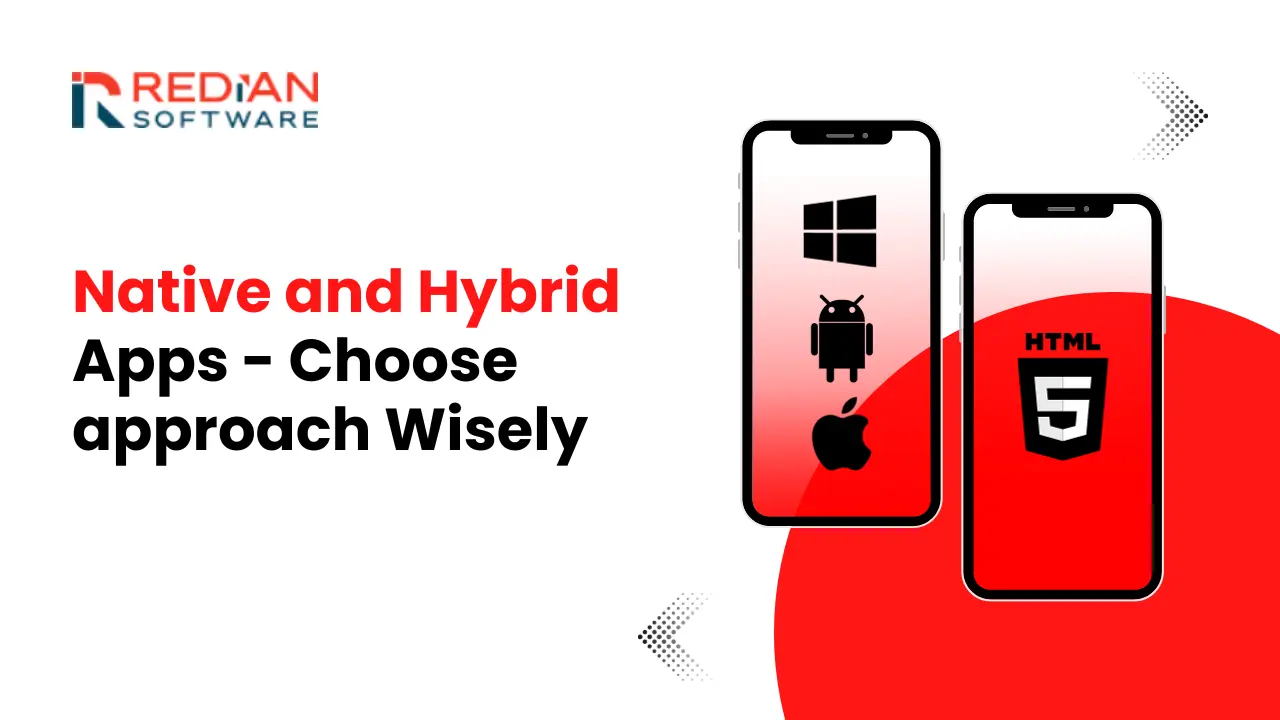
Building an app is energising — it makes a business more congenial and responsive to its customers. But before any screen is designed, there are significant backend choices to make. Choosing between native and hybrid app architectures shapes the eventual fate of the product: how fast it ships, how much it costs to maintain, and how cleanly it integrates with the device underneath.
Facebook famously moved from hybrid back to native after Mark Zuckerberg admitted the company had over-indexed on HTML5, which didn't offer a rich client experience. But that doesn't make native applications automatically the right choice. The decision only becomes clear after understanding the requirement of the business — whether it depends heavily on hardware capabilities like location and camera, or whether it lives on frequently updated content.
What is a Native app?
A native app is written in a platform-specific language: Objective-C or Swift for Apple devices, and Java (today, increasingly Kotlin) for Android devices. Native apps take full advantage of operating-system features and interact directly with pre-installed software. Instagram is a classic example — its responsiveness, camera integration, and gesture handling are hard to match outside of native code. The trade-off is cost: you build, test, and maintain two separate codebases.
What is a Hybrid app?
A hybrid app or web app transforms web code into something that runs on a platform like iPhone or Android. The developer wraps web code with a native SDK so the same project can be installed across different platforms and deliver an efficient, quicker solution. It provides a browser view inside the app shell while still allowing access to features on the mobile device — push notifications, contacts, or offline data storage. Most banks and news-feed apps are built on a hybrid system, because their value sits in content and transactions rather than raw graphics performance.
Choosing for your business
The honest test is what the app is actually for. Content-heavy products with frequent updates, internal enterprise tooling, and customer self-service portals usually do well on hybrid stacks. Anything where the camera, GPU, animation, or biometric integration is the product itself leans native.
Redian Software has well-developed and certified hybrid app expertise and continues to ship native builds when the use case demands it. We see this decision most often in BFSI engagements(/solutions/bfsi), where mobile is now the dominant customer channel, and in CRM front-ends connected to Zoho(/expertise/crm/zoho) or Odoo(/expertise/crm/odoo) back-offices. Choose the approach wisely — and revisit it as the product matures.
Stay current with our insights
One monthly email. Banking, insurance, AI/ML and CRM field notes. No spam.
We respect your privacy. Read our Privacy Policy.
Keep reading
More from Insights
Insights
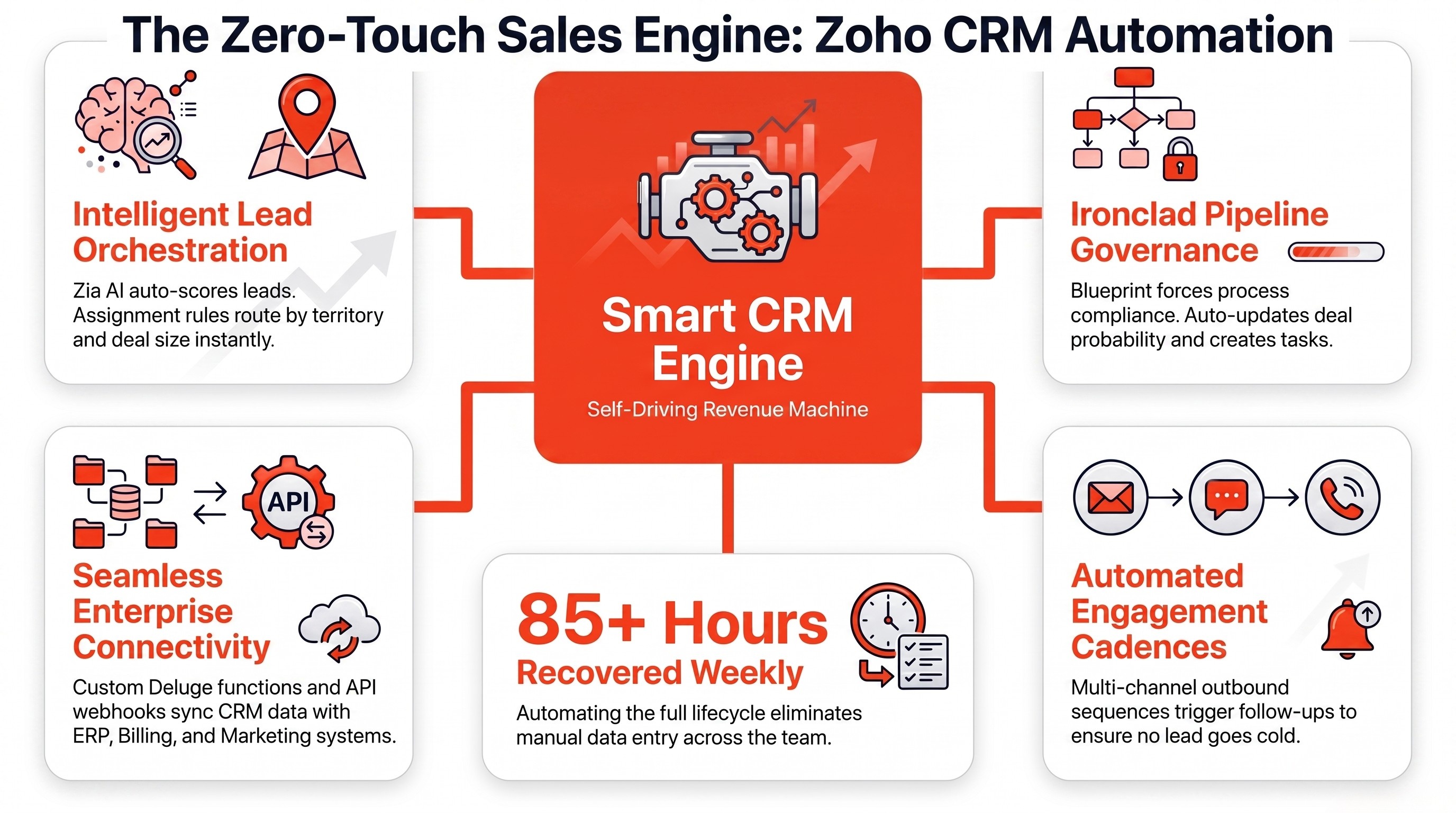
15 Zoho CRM Automations Every US Sales Team Should Build
Most US sales teams using Zoho CRM run it as a glorified contact database and never touch the automation engine. Here are 15 Zoho CRM automations — from Zia AI lead scoring and territory routing to Blueprint pipeline governance, Cadences and Deluge webhooks — that recover 54–85 hours a week for a 10-rep team.
03 Aug 2026

Insights
Why Enterprises in UK are choosing Kenya for their Call Centre Support
UK enterprises are moving voice, email and chat support to Nairobi in growing numbers — 2-3 hours ahead of London, natively English-speaking, UK-GDPR-aligned data protection, and unit economics 60-70% below a comparable UK contact centre. Redian Software runs a Nairobi-based call centre support hub built for exactly this footprint.
30 Jul 2026
Insights
CRM & ERP Implementation in Kenya: Why Top African Enterprises Choose Redian — An Award-Winning CRM/ERP Partner
African enterprises picking a CRM or ERP implementation partner face a specific gap — Western-priced consultancies without African context on one side, single-brand Kenya shops without multi-country depth on the other. Redian sits in the middle: Advanced Zoho Partner and Odoo Official Partner running a Nairobi delivery hub with award-winning credentials verifiable on both vendors' partner directories.
29 Jun 2026
Build with Redian
Have a similar build in mind?
We've shipped insights systems for banks, insurers, brokers, MFIs, SACCOs and enterprises across the USA, UK, Africa, UAE and India. Book a 30-min call with a senior engineer — no pitch deck, just a sharp first read on your initiative.
- CMMI Level 3 Appraised · ISO Certified delivery
- 1 business day response · NDA on request
- Senior engineers, not sales — first call