
End-to-End Xero to Zoho Books Migration Service by Redian Software
Redian handles your Xero → Zoho Books migration end-to-end — scoping, data mapping, historical migration, integrations, parallel run, cutover and hypercare. Fixed-fee, zero downtime, delivered by an Advanced Zoho Partner.

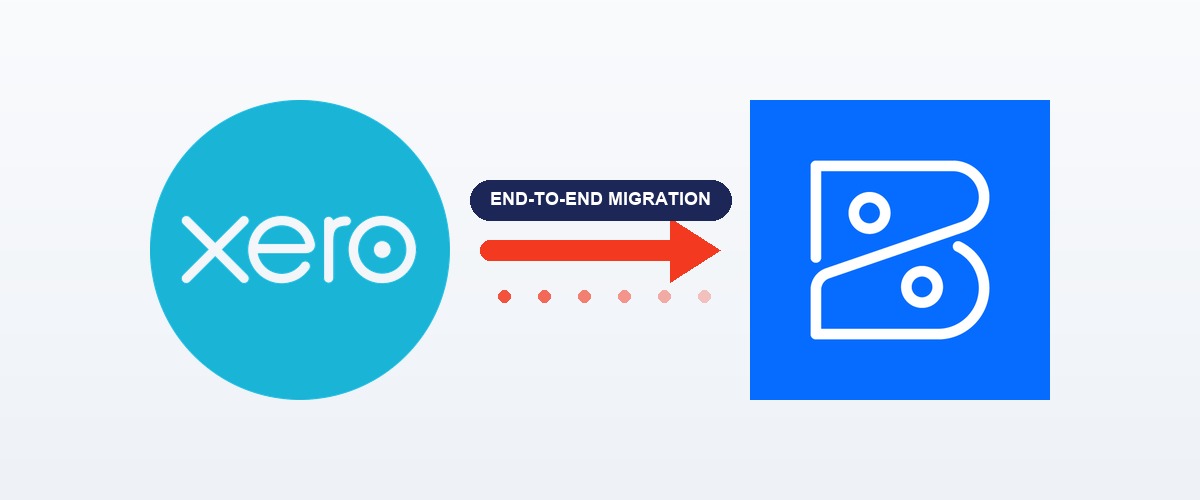
Redian Software delivers end-to-end Xero to Zoho Books migration as a done-for-you service. You do not run the migration — we do. Scoping, data mapping, historical transaction migration, integration rewiring, parallel run, cutover and 60 days of hypercare all sit with our Advanced Zoho Partner team. You keep running your finance function while we replace the platform underneath it.
If you are a business on Xero looking to move to Zoho Books — whether to consolidate on the Zoho ecosystem, cut licensing cost, unlock multi-entity or multi-currency capability, or align with your region's e-invoicing regime — this is the service you engage for.
What Redian Delivers
You give us access to your Xero tenant. We give you back a production-ready Zoho Books setup that matches your Xero closing balance to the last decimal, with every historical transaction preserved and every integration re-wired.
Specifically, our end-to-end service includes:
- Discovery, scoping and mapping — data audit, chart-of-accounts remap, cutover-date planning
- Zoho Books organisation setup — base currency, fiscal year, tax registrations, templates, users, roles, approval workflows
- Full historical data migration — customers, vendors, contacts, products, invoices, credit notes, bills, purchase orders, expenses, journal entries, payments, transfers, account details, opening balances — up to15 years of history
- Bank statement history + live feed re-enrolment on Zoho Books' bank feed provider
- Tax configuration — rates, exemptions, e-invoicing profile, VAT/GST registration with historical rate coverage
- Parallel run + UAT for one full accounting period — trial balance, P&L and balance sheet reconciled to zero variance against Xero
- User training for AP, AR, banking and management teams
- Cutover execution — Xero placed in read-only mode, final delta migration, Zoho Books goes live
- 60-day hypercare — staffed by the engineers who built your migration, not a support desk
Everything sits under a signed statement of work with a fixed fee. No time-and-materials creep once scope is locked.
Why Businesses Engage Us for This
Doing a Xero → Zoho Books migration in-house looks straightforward until you hit the first messy edge case. Foreign-currency revaluation dates drift. Bank feeds break. Attachments orphan. Custom reports do not export in any Zoho-importable format. Chart-of-accounts type mismatches between Xero and Zoho Books quietly corrupt your opening balance.
Every one of those has broken an in-house migration we were later called in to fix. Engaging Redian at the start avoids the rework — and buys you the compliance rigour and audit trail your finance team needs.
Our customers engage us because:
- We are an Advanced Zoho Partner — not a reseller. Deep Zoho Books, Creator and One implementation experience. Learn more about our Zoho partnership and Zoho practice.
- 500+ Zoho implementations across 300+ global clients — SaaS, staffing, real estate, healthcare, manufacturing, financial services
- Zoho Emerging Partner of the Year 2024 — East Africa — Zoho's recognition for delivery excellence
- Multi-region compliance depth — India (GST + e-invoicing), UAE (VAT + FTA e-invoicing), KSA (VAT + ZATCA), UK (VAT + MTD), USA (multi-state sales tax), Kenya (VAT + eTIMS), and other African markets
- CMMI Level 3 delivery discipline — traceable mapping, reconciliation trail, paired-environment testing, auditable release process
- Same engineers build and support — no handoff to a support squad. 97% retention across our Zoho customer base.
The Service — How We Run Your Migration
Every migration follows a five-phase playbook.Once discovery is complete, we deliver the migration within 2 weeks per entity. The five phases run in sequence with a fixed cutover date agreed at the end of discovery. Multi-country or multi-entity engagements are quoted separately — see the pricing section for details.
Phase 1 — Discovery & scoping
We take a complete export of your Xero tenant via API and Report Centre, audit transaction volume across contacts, items, invoices, bills, journal entries and attachments, and run a chart-of-accounts mapping workshop with your finance lead. We confirm tax regime and effective dates, inventory every third-party integration hitting Xero, and lock the cutover date.
You get: a signed data-mapping document, integration register, and fixed-fee SoW.
Phase 2 — Zoho Books configuration
We set up your Zoho Books organisation with correct base currency, fiscal year, tax registrations and currency provider. Chart of accounts and tax groups are imported and locked. Invoice, credit-note and bill templates are branded to match your existing Xero templates. Approval workflows, role permissions and user accounts are configured — using existing Zoho One or Directory SSO where applicable.
You get: a configured Zoho Books org ready to receive data.
Phase 3 — Data migration
We migrate in dependency order: journal openings → chart of accounts → vendors → customers → contacts → items → bills → invoices → credit notes → payments → transfers → bank reconciliations. Every batch is validated against the Xero source count before the next batch runs, with a signed-off reconciliation trail per batch.
You get: up to 15 years of historical data loaded, with a reconciliation trail per batch.
Phase 4 — Parallel run & UAT
You run both Xero and Zoho Books in parallel for one full accounting period. We reconcile trial balance, P&L and balance sheet between the two — the target is zero variance. We re-authorise the bank feed on Zoho Books, and train your finance team on Zoho Books workflows.
You get: a system your CFO has already verified against Xero for one full period, plus a trained team.
Phase 5 — Cutover & hypercare
On the agreed cutover date we place Xero in read-only mode, run a final delta migration of any transactions created since the last sync, and Zoho Books goes live. Hypercare desk is staffed by the same engineers who built the migration for 60 days post-live.
You get: a live Zoho Books setup, a handover pack (mapping document, reconciliation trail, integration diagram, user manuals), and direct engineer access for 60 days.
What's In Scope
Every migration engagement covers the following data domains as standard. Attachments and third-party integrations are out of scope — this keeps the engagement fixed-fee, predictable and clean.
| Domain | What's included |
|---|---|
| Chart of Accounts | All active accounts with codes, types, tax defaults, currency — remapped to Zoho Books taxonomy |
| Customers | Full customer master with addresses, tax IDs, opening balances, currency-per-contact |
| Vendors | Full vendor master with addresses, tax IDs, opening balances, currency-per-contact |
| Contacts | Contact persons linked to customers and vendors, roles and communication defaults |
| Products / Items | Inventory items with sales/purchase prices, tax rates, tracked stock, valuation method |
| Invoices | All historical invoices with line items, tax breakdown, statuses and payment linkage |
| Credit Notes | All historical credit notes with source-invoice linkage |
| Bills | All historical bills with line items, tax breakdown and payment linkage |
| Purchase Orders | Open and closed POs with vendor linkage and receipt status |
| Expenses | Cash and card expenses with categorisation and tax coding |
| Journal Entries | Manual and system-generated journals in full |
| Payments | Customer receipts, vendor payments, refunds — reconciled against invoices/bills |
| Transfers | Inter-account transfers and bank-to-bank movements — up to15 years of history |
| Account Details | Bank and credit card accounts with account numbers, currency and opening balances |
| Statement History | Historical bank statements migrated as records;live bank feeds re-enrolled on Zoho Books' bank feed provider |
| Tax Configuration | Tax rates, exemptions, e-invoicing profile, VAT/GST registration with historical rate coverage |
Explicitly out of scope: attachments (invoice PDFs, bill scans, contact documents) and third-party integrations (Stripe/PayPal/Shopify/expense apps/custom Deluge integrations). Ask us for a quote if you want these added on.
Beyond the Migration — What Zoho Books Unlocks
Migrating to Zoho Books is rarely just about accounting — most of our customers unlock a broader Zoho footprint once Books is in place. We can extend the engagement to cover:
- Zoho CRM → Books integration — sales invoices auto-created from CRM opportunities, payment status flowing back to CRM
- Zoho Inventory → Books integration — stock movements post to inventory accounts in real time
- Zoho People → Books integration — payroll journals auto-post each pay cycle
- Zoho Custom Payroll — Zoho Creator-based payroll for organisations with complex pay structures
- Zoho Analytics dashboards replacing manual Excel management packs
- Zoho Subscriptions integration for recurring-revenue businesses
- Regional compliance modules — GST returns (India), VAT filings (UAE, UK, KSA), e-invoicing (KSA ZATCA, UAE FTA, Kenya eTIMS)
These are quoted as add-on scope once the core migration SoW is signed.
Pricing
Every engagement is fixed-fee against a signed SoW. The fees below apply tosingle-country, single-entity migrations. Once discovery is complete, we deliver the migration within 2 weeks per entity.
| Business size (single country, single entity) | Fixed fee |
|---|---|
| Small business (≤2,000 transactions/year) | USD 2,400 |
| Mid-size business (up to ~50,000 transactions/year) | USD 3,600 |
| Large enterprise (> 50,000 transactions/year) | USD 5,000 |
Multi-country or multi-entity engagements are quoted separately after discovery. Each additional entity adds roughly 2 weeks to the delivery window and its own line-item fee; multi-country migrations layer in the jurisdictional tax and e-invoicing configuration each region requires. Ask us for a scoped quote.
The 2-day discovery workshop is included and runs before the migration window kicks off — we scope, map and sign the SoW before any migration work starts. Post-migration hypercare (60 days) is included in the fixed fee. Annual AMS is optional at a fixed monthly retainer.
Engage Redian for Your Xero → Zoho Books Migration
If you are ready to move off Xero, or you are still evaluating and want an honest conversation before deciding, we would like to talk.
- Talk to our Zoho team — book a 30-minute discovery call and we will send back a sized proposal within five working days
- Review the Zoho practice and Zoho Custom Payroll
- See real Zoho deployments in our case studies — Solutech (sales), Q-Sourcing Servtec (Zoho One), Echo Network Africa (Zoho Desk), ALLM Africa (CRM + Projects)
FAQs
Do you handle the entire migration end-to-end, or is this a self-serve service?
End-to-end. You do not run the migration. Redian's Advanced Zoho Partner team handles scoping, mapping, configuration, historical data migration, integration rewiring, parallel run, UAT, cutover and 60 days of hypercare. Your finance team keeps running the business on Xero until go-live and then continues on Zoho Books without a break.
How long will our migration take?
We complete the migration within 2 weeks per entity once discovery is complete. Discovery itself is a 2-day workshop that runs before the migration window kicks off — during discovery we lock scope, mapping and the cutover date. A single-entity engagement is 2 weeks. Two entities is roughly 4 weeks, three entities roughly 6, and so on. Multi-country migrations add jurisdictional configuration time and are quoted separately.
Will there be any downtime for our finance team?
No. We run Xero and Zoho Books in parallel for one full accounting period before cutover. On the cutover date, Xero is placed in read-only mode and Zoho Books goes live — your finance team is never without an accounting system.
How much historical data will you migrate?
Up to15 years of Xero history — invoices, credit notes, bills, purchase orders, expenses, journal entries, payments, transfers and bank reconciliations, plus the full customer, vendor and contact master. Attachments (invoice PDFs, bill scans) are out of scope by default; ask us to quote if you need them included.
What happens to our bank feeds?
Historical bank statement data migrates as records within Zoho Books.Live bank feeds are re-enrolled on Zoho Books' bank feed provider during Phase 4 (parallel run) so your finance team never misses a bank sync at cutover. Third-party integrations (Stripe, PayPal, Shopify, expense apps, custom Deluge integrations) areout of scope by default — if you need those rewired, we can add them as a separate quote.
How much will the migration cost?
For single-country, single-entity migrations: small businesses USD 2,400, mid-size businesses USD 3,600, large enterprises USD 5,000. Every engagement is fixed-fee against a signed SoW. Multi-country or multi-entity migrations are quoted separately after discovery — each additional entity adds its own line-item fee reflecting the extra scope and configuration effort. The 2-day discovery workshop and 60 days of post-migration hypercare are included in the fixed fee — no time-and-materials creep.
Which countries and tax regimes do you cover?
We have delivered Xero → Zoho Books migrations covering India (GST + e-invoicing), UAE (VAT + FTA e-invoicing), KSA (VAT + ZATCA), UK (VAT + MTD), USA (multi-state sales tax), Kenya (VAT + eTIMS), and multiple African markets. If your jurisdiction is not on this list, we scope compliance-module setup in Phase 1.
Will you also integrate Zoho Books with our other Zoho apps?
Yes — either as part of the same engagement or as add-on scope. Zoho CRM → Books, Zoho Inventory → Books, Zoho People → Books, Zoho Subscriptions and Zoho Analytics dashboards are the most common add-ons. We quote add-ons once the core migration SoW is signed.
What does post-migration support look like?
Sixty days of hypercare are included in every migration engagement — staffed by the same engineers who built your migration, not a rotated support desk. After that, an annual AMS retainer covers 24×7 support, statutory updates (finance-act changes, tax rate revisions, new e-invoicing schemas) and ongoing enhancements. 97% of our Zoho customers stay on AMS multi-year.
Stay current with our insights
One monthly email. Banking, insurance, AI/ML and CRM field notes. No spam.
We respect your privacy. Read our Privacy Policy.
Keep reading
More from Zoho

Zoho
Zoho Books and KRA eTIMS Integration: What Kenyan Businesses Need to Know
Zoho Books connects directly to KRA eTIMS via the Online Sales Control Unit (OSCU) — validate customer PINs, generate QR-coded tax invoices and transmit to KRA in real time. A step-by-step setup guide for Kenyan businesses from an accredited Advanced Zoho Partner.
02 Oct 2026
Zoho
How to Set Up Zoho CRM for Real Estate Lead Management in UAE
A practical implementation guide for UAE brokerages using Zoho CRM for real estate, built on Redian Software's hands-on deployment experience across Africa, the UK, India and the US.
17 Sept 2026

Zoho
Build to Last. One System — Zoho for Real Estate Developers
A three-part masterclass on unifying construction management, multi-channel sales, and post-handover property operations on one Zoho stack — with revenue-leakage safeguards CFOs actually trust.
04 Sept 2026
Build with Redian
Have a similar build in mind?
We've shipped zoho systems for banks, insurers, brokers, MFIs, SACCOs and enterprises across the USA, UK, Africa, UAE and India. Book a 30-min call with a senior engineer — no pitch deck, just a sharp first read on your initiative.
- CMMI Level 3 Appraised · ISO Certified delivery
- 1 business day response · NDA on request
- Senior engineers, not sales — first call