
Your board signed off on an India GCC because the cost case was unanswerable. Eighteen months in, the centre is staffed, the floor is full, and the parent is still treating it like a vendor with a swipe card. That gap — between what a Global Capability Centre can be and what most of them actually deliver — is the real conversation now, and it is the one too few leadership teams are having out loud.
A twenty-year story turning a corner
The first wave of India GCCs was about cost arbitrage. Move tickets, move tests, move tier-one support. The maths worked, the parent stopped asking questions, and the centre quietly became a line item in the operations budget.
The second wave was about technology delivery. Engineering pods, platform teams, a CTO who flew in twice a year and called it strategy. Useful, but still derivative — the parent set the agenda, the centre executed it.
The third wave, the one playing out right now across Bangalore, Hyderabad, Pune, Gurgaon and increasingly Noida, is different in kind, not degree. The GCC is no longer a delivery arm. It owns the parent's innovation agenda — AI roadmaps, product bets, regulatory tech, the things that actually move enterprise value. The centres still hitting eighty-percent utilisation on managed-service tickets have missed the turn. The ones building patents, shipping products and running P&Ls have not.
What the new GCC actually looks like
Strip away the brochure language and a modern India GCC has four traits that the back-office version did not.
AI/ML practice owned end-to-end. Not a data-engineering team feeding models that get tuned in HQ. The whole stack — problem framing, data acquisition, model training, MLOps, production monitoring, regulatory documentation — sits in one building under one leader. The parent gets outcomes, not Jupyter notebooks. Insurance pricing engines, claims triage, credit-decisioning models, fraud detection in real-time payment rails: these are now routinely owned by Indian centres with the parent reviewing results, not architecture.
Product engineering with founder-level autonomy. A GCC that has to escalate every roadmap decision to HQ is not a GCC, it is a staffing model in a different time zone. The centres that work give their leaders the same ambit a startup CEO would have — a product, a budget, a target, and the right to hire, fire and reorganise inside that envelope. The parent reviews quarterly, not weekly.
Finance, HR and risk operations digitised for the parent. The back-office work has not gone away; it has been re-platformed. Order-to-cash, hire-to-retire, record-to-report — these are now automation programmes, not transaction queues. A modern centre runs them on Oracle Fusion, SAP S/4, Workday or a stitched stack of best-of-breed platforms, with bots, RPA and increasingly LLM agents handling the exception cases that humans used to. The headcount story is flat or shrinking; the throughput story is up four to ten times.
Leadership that flies between HQ and the centre monthly, not annually. This is the single most reliable predictor of whether a GCC is actually doing third-wave work. If the parent's CEO, CTO and CHRO turn up in Bangalore once a year, the centre will behave like a vendor. If they show up every six weeks and the centre's leadership shows up at HQ on the alternate weeks, you have a captive that is genuinely captive.
Why the cost-arbitrage frame is now dangerous
The most expensive mistake a parent can make in 2026 is to scope its GCC against the wrong benchmark. Comparing the loaded cost of a Bangalore engineer to a San Francisco engineer was the 2008 conversation. The 2026 conversation is comparing the value a Bangalore-led AI product team delivers to the value a US-led one would have delivered against the same brief — and the differential there is not labour cost, it is speed, talent depth and access to the volume of engineers India produces every year.
Treating the centre as a cost-saving mechanism caps its ceiling at exactly that. Treating it as a capability bet — with the parent prepared to fund leadership, platform investment and the occasional failed experiment — uncaps it. Every parent we work with that has crossed this Rubicon now describes its GCC as the place its hardest problems get solved first, not last.
The setup problem is not the setup
Entity registration in the right Indian state, STPI or SEZ election, GST registration, transfer-pricing documentation, payroll, statutory compliance, leased or owned infrastructure, network, security posture, ISO and SOC alignment — all of this is well-trodden ground. Any competent India advisor can hand a parent a project plan that gets them from board approval to a working centre in six to nine months. The setup is not the hard part.
The hard part — the part that determines whether the centre delivers third-wave outcomes or quietly settles back into managed-service work — is the first leadership hire. Get the centre head right and almost every other problem becomes solvable. Get them wrong and the centre will spend three years pretending to be strategic while behaving like a body shop. The traits that matter:
- They have run a P&L, not just a delivery org. A captive without a leader who thinks in revenue and margin defaults to cost-centre behaviour.
- They have HQ credibility. Either they came from the parent and chose to relocate, or the parent's executive team has worked with them closely enough that a phone call from Bangalore at 11pm gets answered.
- They hire above their level. A centre head who is threatened by strong direct reports will staff the centre with people who execute orders. A centre head who is comfortable hiring people more capable than themselves builds an organisation that compounds.
- They can say no to the parent. This is the most underrated trait. A centre that accepts every request becomes a shared-services desk. A centre whose leader pushes back on scope, sequences work properly and protects the team's focus delivers more, not less.
Setting up a GCC in India is, in the end, a hiring problem dressed up as a compliance problem.
What the parent has to change about itself
A GCC does not become a third-wave centre on its own. The parent organisation has to change at least three things about how it operates, and the parents who refuse to make these changes end up with second-wave centres regardless of how much they spend.
Decision rights have to move with the work. If the centre owns the AI roadmap, the centre approves the AI roadmap. HQ cannot retain veto on every architectural choice and call it ownership.
Compensation philosophy has to extend. The leadership tier of a serious GCC commands compensation that looks like HQ compensation, not local compensation. Equity, long-term incentives, the works. Centres that try to retain top product and engineering leaders on a delivery-org pay band lose them inside eighteen months.
Career paths have to be two-way. The strongest signal a parent can send is that the path from a Bangalore product leadership role to an HQ executive role exists and has been walked. Once one person has done it, the talent ceiling lifts permanently. Until that happens, the best engineers and product managers will treat the centre as a stepping stone to somewhere else.
Where Noida fits in
The geographic conversation has narrowed over the last decade to Bangalore and Hyderabad almost by default, but the third-wave GCC story is widening it again. Noida, in particular, has become a serious contender for parents who want proximity to Delhi-NCR's regulatory ecosystem, lower attrition than the southern hubs, a deeper pool of fintech and BFSI engineering talent, and infrastructure that has finally caught up with the demand.
For BFSI parents specifically — banks building core banking modernisation capability, insurers standing up pricing and rating engines or policy administration platforms — Noida combines BFSI domain depth, AI/ML talent and lower operating cost than Bangalore in a way that few alternatives match. We have built and supported centres for African, European and Middle Eastern parents from Noida that would have struggled to find the same talent mix anywhere else at the same cost.
How a build-operate-transfer engagement actually plays
Most parents we work with do not want to spend the first year learning Indian compliance, real-estate, talent and statutory law on their own dime. The pattern that works is a phased engagement:
The first phase is incubation. Redian stands up the entity, the infrastructure, the security baseline, the initial hires and the first deliverables, all under our managed envelope. The parent's name is on the door from day one but our operational scaffolding is doing the heavy lifting. This typically runs six to twelve months and gets the centre from zero to forty or fifty engineers delivering against a real backlog.
The second phase is operation. The centre's permanent leadership joins, the engineering and product disciplines mature, and Redian transitions from running the centre to supporting it. We continue to provide staff augmentation, specialist remote engineers and access to our broader AI/ML practice where the centre needs to surge without permanent hires.
The third phase is transfer. The parent owns the centre outright, the talent, the IP and the operating model. Our role is over unless the parent chooses to keep a long-term partnership for specific capabilities. Most do, but the choice is genuinely theirs.
This BOT model removes most of the failure modes of a cold start — wrong location, wrong first hires, wrong infrastructure decisions, wrong compliance posture — without trapping the parent in a vendor relationship indefinitely.
The next five years
The India GCC count crossed 1,700 in 2024 and the growth curve has not flattened. What is changing is the composition. New centres being announced today are smaller at launch, more senior at the top, and explicitly chartered for product, AI or domain ownership rather than ticket throughput. The centres announced in 2010 that did not evolve are being quietly wound down or re-platformed by their parents. The cost case alone no longer justifies the overhead.
For any parent organisation still treating its India presence as a back office, the window to change that frame is closing. The talent that wants to do third-wave work has options, and a centre that cannot offer them will lose them to one that can.
Build with Redian
We have helped insurers, banks, software vendors and enterprise platforms across the UK, US, Africa and the Middle East stand up India GCCs that ship product, not just tickets. If you are scoping a centre, re-platforming one that has stalled, or planning the leadership hire that will define the next three years, we should talk. Start with our GCC setup practice or read how we work — both are good first steps.
Stay current with our insights
One monthly email. Banking, insurance, AI/ML and CRM field notes. No spam.
We respect your privacy. Read our Privacy Policy.
Keep reading
More from GCCs
GCCs
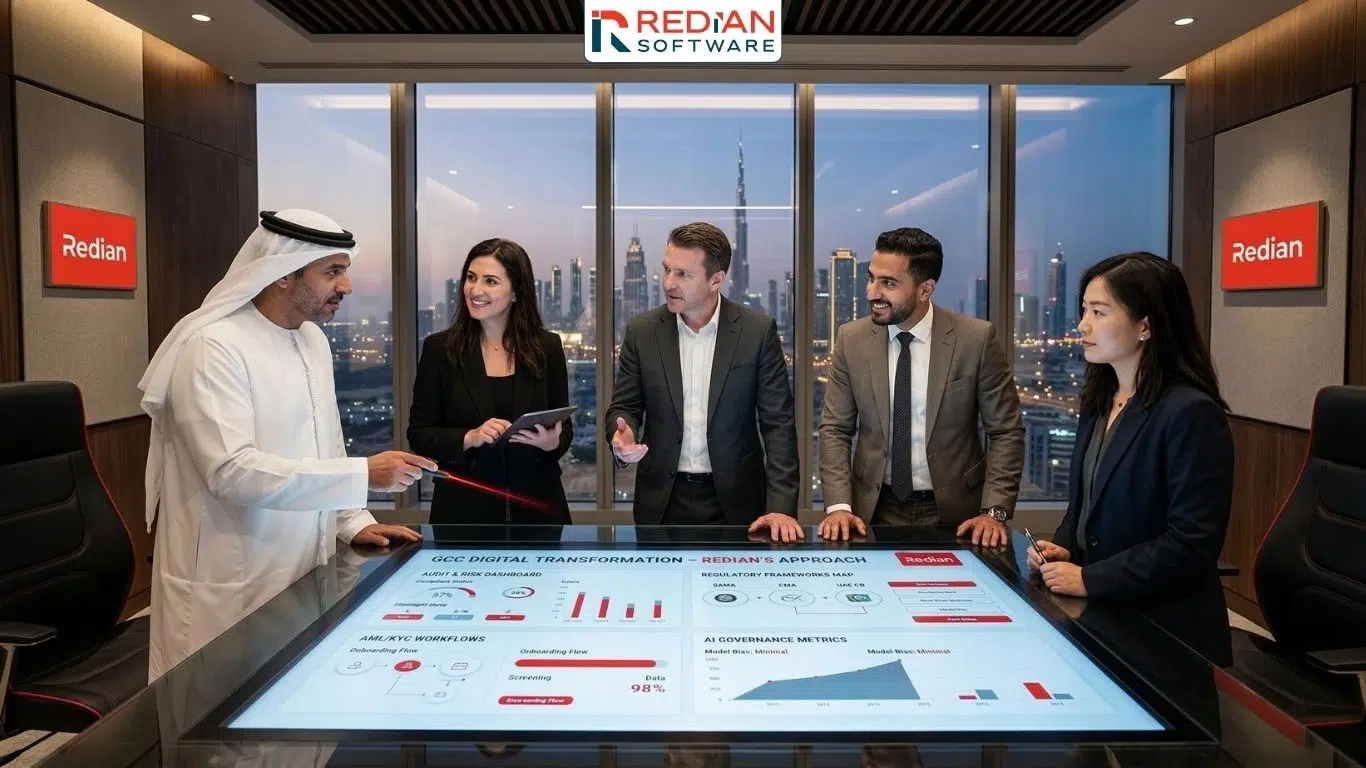
GCC regulatory compliance — digital transformation through RegTech
How Global Capability Centres are leading the RegTech wave — automating regulatory compliance across banking, insurance and finance.
08 Mar 2026
CRM
Finding the Right CRM Development Company in India
Why India has become a global hub for CRM development, what to look for in a partner, and how Redian delivers on Salesforce, Zoho, SuiteCRM and SugarCRM.
05 Jun 2026
CRM
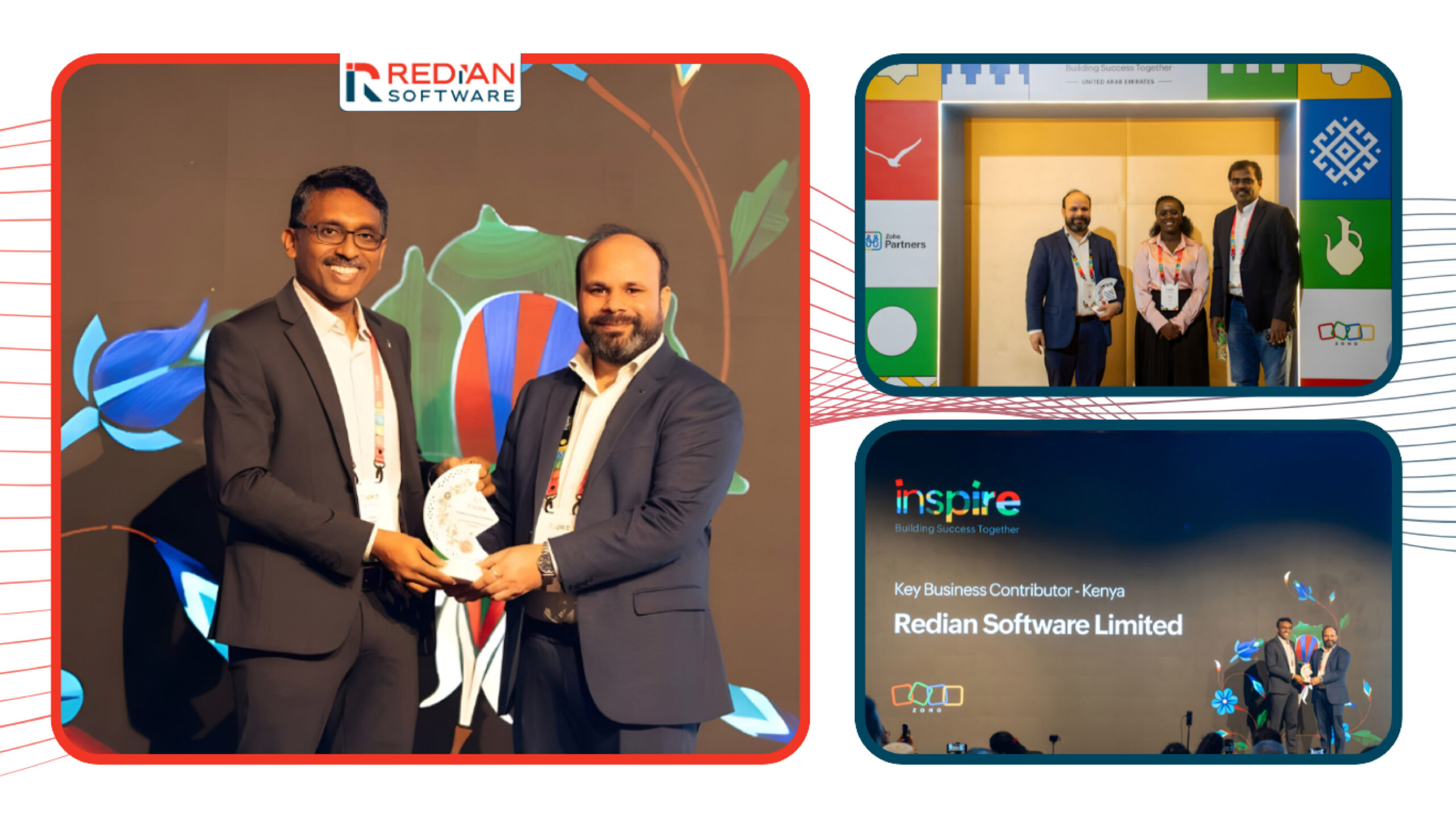
Complete Guide to Becoming a Certified Zoho Developer in India — Your Path to Success
Certification levels, salary bands, in-demand skills and a 12-month action plan to build a career as a Zoho Developer in India.
22 May 2026
Build with Redian
Have a similar build in mind?
We've shipped gccs systems for banks, insurers, brokers, MFIs, SACCOs and enterprises across the USA, UK, Africa, UAE and India. Book a 30-min call with a senior engineer — no pitch deck, just a sharp first read on your initiative.
- CMMI Level 3 Appraised · ISO Certified delivery
- 1 business day response · NDA on request
- Senior engineers, not sales — first call