

Between 40 and 60 percent of enterprise AI projects never reach production. After six years of building AI/ML systems for banks, insurers and energy majors, we can tell you the model is almost never the reason. The strategy was wrong before the first line of code was written — the wrong use-case got picked, the data wasn't ready, there was no MLOps plan, the regulator was an afterthought, and the ROI math didn't survive contact with finance.
That is the work an AI/ML strategy engagement is meant to prevent. Done properly, it costs a fraction of a full build and decides whether the build is worth doing at all.
The 2026 buyer problem
The pressure on BFSI and energy CXOs is now bidirectional. Boards want an AI narrative for the annual report. Regulators — RBI, IRDAI, FCA, the EU AI Act regime, Africa's emerging frameworks — want documented governance, bias testing and human oversight on anything that touches a customer decision. Cloud bills from last year's GenAI experiments are landing. And the use-cases that genuinely move the P&L are not the ones the vendor demos showed.
Most enterprises are sitting on a backlog of 20 to 60 candidate AI ideas, a handful of stalled pilots, one or two production models nobody quite trusts, and a leadership team that no longer agrees on what "AI strategy" means. The right next move is not another proof-of-concept. It is a structured, vendor-independent assessment of where AI actually creates defensible value in your business, and what it will cost to get there safely.
What a real AI/ML strategy engagement covers
A credible strategy engagement is a 2–8 week piece of work with a small senior team and a clear, board-grade deliverable. Anything shorter is a sales pitch. Anything longer is consulting theatre.
The scope we run with clients on AI/ML consulting engagements has five components, and each of them has to land before the engagement closes.
Use-case discovery and prioritisation
We interview business heads, data and analytics leads, the CRO and risk function, technology, and — critically — the front-line operators who will actually use whatever gets built. From those conversations we surface candidate use-cases, then score each one on value, feasibility, time-to-impact and regulatory load. The output is a ranked shortlist with a clear top three, a "park for 2027" list, and an explicit kill list. The kill list is often the most valuable artefact.
Data and infrastructure readiness audit
A use-case is only as good as the data behind it. We audit what exists, what's missing, where the lineage breaks, where the labels are inconsistent, and where the governance gaps will block production. We map the current stack against what an MLOps capability needs — feature store, experiment tracking, model registry, monitoring, drift detection, retraining pipelines — and we cost the gap honestly. For BFSI clients we layer in the data residency and consent constraints that come with operating across India, the GCC, the UK and Africa.
ROI, risk and regulatory plan
This is where most strategy decks fail. We force every prioritised use-case through a defensible ROI model: the actual revenue lift or cost reduction, the cost to build and run, the cost of being wrong, and the time the business will wait. We then overlay bias and explainability requirements, the model risk management posture the regulator expects, and the human-in-the-loop controls that will need to sit around the model. For BFSI clients this is non-negotiable — a model that can't be explained to a regulator is a model that can't go live.
Model and platform selection — independent
GenAI or classical ML. Open weights or closed API. Self-hosted or managed. Vector store, orchestration framework, evaluation harness, guardrail layer. These choices have three-to-five-year cost and lock-in consequences, and the right answer for a tier-one bank is rarely the right answer for a broker or a mid-sized insurer. We are deliberately independent here. We don't resell foundation models, we don't take referral fees from cloud vendors, and we will tell you when the open-source option that costs a tenth as much is the better engineering call.
Quarter-by-quarter delivery plan
The engagement closes with a 12-month plan: which use-case starts in Q1, what the budget envelope is, who owns it on the business side, what the exit criteria are at each gate, and what gets killed if a gate is missed. Without exit criteria, every AI programme drifts into a slow, expensive maybe.
Where we earn our fee
About 40 percent of our AI/ML consulting engagements end with us recommending the client not fund the project — or fund a much smaller version of it. That number is not a marketing line; it is the honest distribution of outcomes when you stress-test use-cases against data reality and ROI math.
That honesty is what clients hire us for. We earn from delivery, not from picking the vendor that pays us the most, and we have no incentive to greenlight a build that won't pay back. When we do recommend a build, the client knows the recommendation has survived a real argument inside our team.
The use-cases that are actually working in BFSI
Strategy work has to be grounded in what is shipping, not what is being demoed. Across the engagements we have run on banking and insurance platforms, a clear pattern has emerged in 2025–26.
In banking, the durable wins are in credit decisioning for thin-file segments, early-warning models on the lending book, transaction monitoring with materially lower false-positive rates, and document-heavy back-office work — KYC, onboarding, trade finance paperwork — where GenAI extraction now genuinely changes the unit economics. Customer-facing chatbots, by contrast, are still mostly disappointing relative to the spend.
In insurance, the value is concentrating in ML pricing and rating engines, claims triage and fraud detection, and underwriting assistance for complex commercial lines. The policy administration system is where the data lives, and the strategy engagement has to confirm that data is accessible and clean enough before any pricing model goes anywhere near production.
In energy, the highest-ROI use-cases are still in asset reliability — predictive maintenance, anomaly detection on sensor streams, demand forecasting — rather than in the more fashionable generative work.
The common thread: the wins are operational, measurable and bounded. The disappointments are the projects sold on transformation language without a P&L line attached.
MLOps readiness — the silent killer
The single most common reason a working model never makes it to production is that the organisation has no operational home for it. There is no monitoring, no retraining schedule, no drift alerting, no rollback plan, no clear owner when something breaks at 2am. The data science team built it; nobody can run it.
A strategy engagement that does not honestly assess MLOps maturity is incomplete. We grade clients on five dimensions — data pipelines, experiment management, deployment, monitoring, and governance — and the score determines how aggressive the 12-month plan can be. A 2-out-of-5 organisation should not be attempting four parallel production models. It should be building the platform first and shipping one well-instrumented use-case to prove the operating model.
This is also where digital transformation and AI strategy stop being separate conversations. You cannot bolt production AI onto a brittle data estate.
How regulation reshapes the plan
Every BFSI client we work with now has to plan for at least three overlapping regimes: their domestic regulator, the data protection regime in each market they operate in, and the emerging AI-specific rules — the EU AI Act being the most consequential, but not the only one. Energy clients face their own grid, safety and emissions reporting overlays.
The strategy has to bake in, from day one, the model documentation, the bias and fairness testing cadence, the human review thresholds, and the audit trail the regulator will eventually ask for. Retrofitting governance onto a model already in production is two-to-three times more expensive than building it in. Our IT consulting practice runs the regulatory mapping in parallel with the technical work so the plan that lands on the board table is one document, not two that contradict each other.
What the deliverable looks like
A Redian AI/ML strategy engagement closes with four artefacts the client owns outright:
- A prioritised use-case portfolio with ROI, risk and regulatory scoring for each candidate
- A data and MLOps readiness assessment with a costed remediation roadmap
- A reference architecture and platform selection memo, independent of any vendor relationship
- A 12-month delivery plan with quarterly gates, named owners and explicit exit criteria
The board gets a 20-slide narrative. The CTO gets the technical appendix. The CFO gets the ROI model in a spreadsheet they can stress-test. And the CRO gets a regulatory exposure map. One engagement, four audiences, one consistent story.
Build with Redian
Once the strategy is validated, the same team can move into delivery on AI/ML development, or hand over to your internal team with a clean roadmap. Most clients run the strategy as a fixed-fee, time-boxed engagement and then decide on the build separately — which is how it should work. If you have a backlog of AI ideas and need an honest second opinion before the next budget cycle, start a conversation and we will tell you, in writing, what is worth building and what isn't.
Stay current with our insights
One monthly email. Banking, insurance, AI/ML and CRM field notes. No spam.
We respect your privacy. Read our Privacy Policy.
Keep reading
More from AI/ML
AI/ML
AI/ML model development for enterprise — production, not demos
How to build AI/ML models that survive contact with production — MLOps, evaluation harnesses, drift monitoring, governance and the discipline that separates real ML from notebooks.
15 Sept 2025
AI/ML
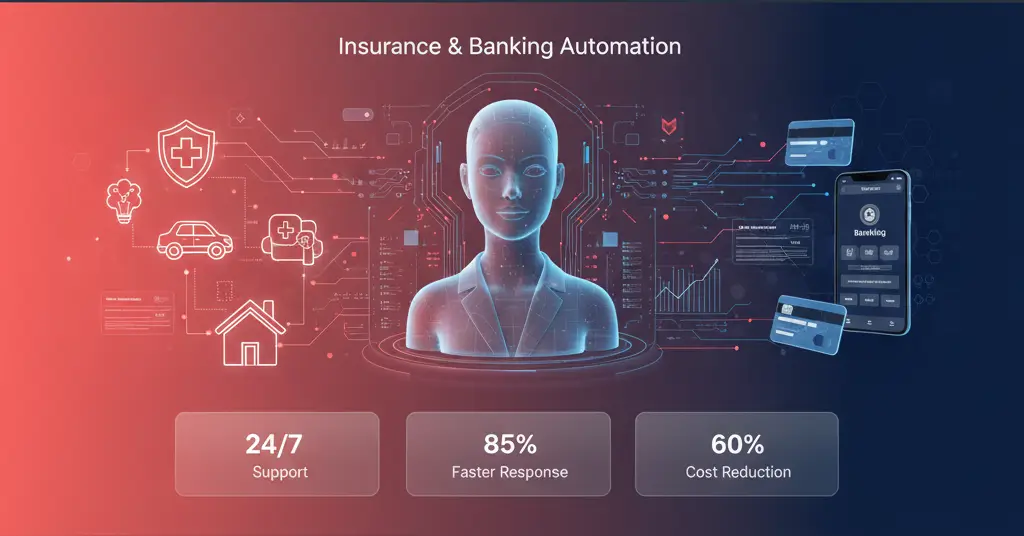
Gen AI virtual agent platform for insurance and banking
How a Gen AI virtual agent platform automates claims, loans and customer service with 85% faster response times. The architecture and the outcomes.
15 Sept 2025
AI/ML
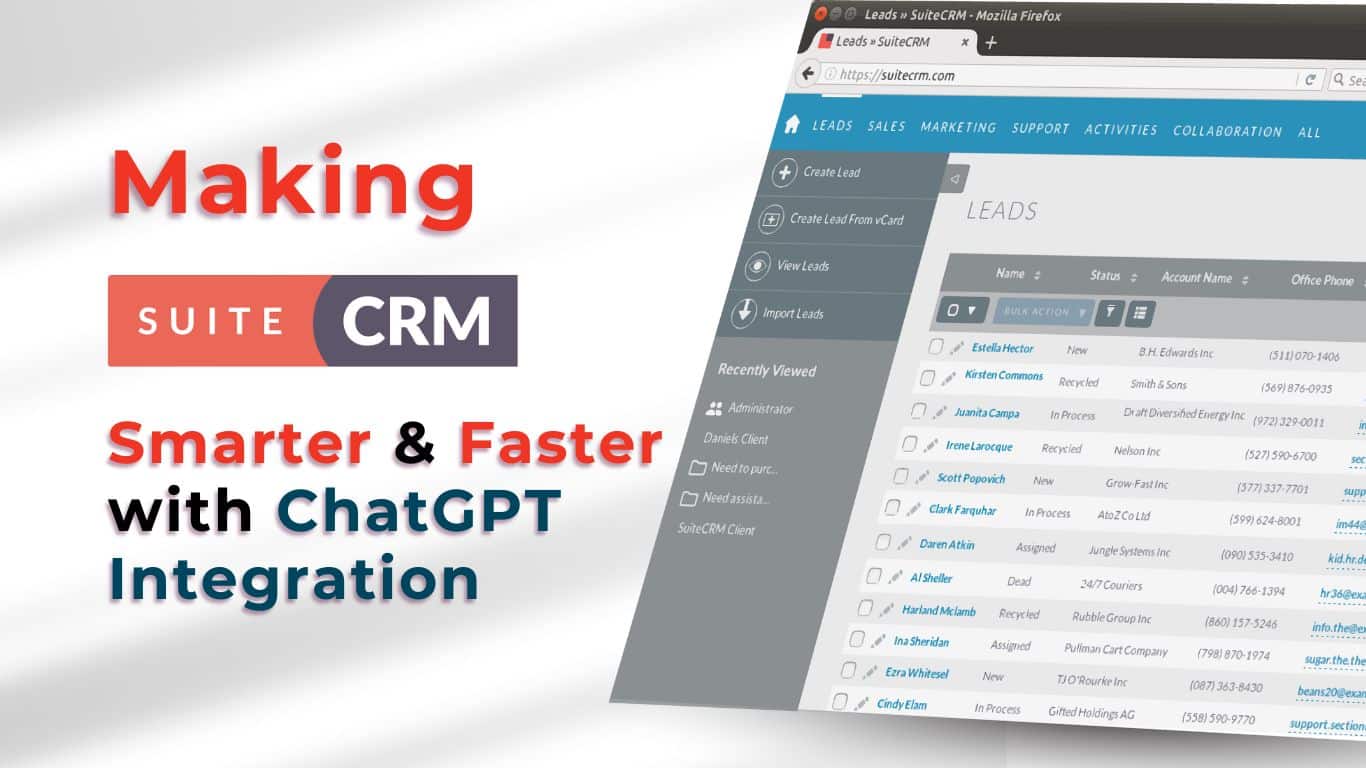
Now enjoy the power of ChatGPT in SuiteCRM with help of ChatGPT Plugin for SuiteCRM by Redian Software
Discover how the ChatGPT Plugin for SuiteCRM revolutionizes customer interactions. Automate email responses, simplify template creation.
04 Dec 2024
Build with Redian
Have a similar build in mind?
We've shipped ai/ml systems for banks, insurers, brokers, MFIs, SACCOs and enterprises across the USA, UK, Africa, UAE and India. Book a 30-min call with a senior engineer — no pitch deck, just a sharp first read on your initiative.
- CMMI Level 3 Appraised · ISO Certified delivery
- 1 business day response · NDA on request
- Senior engineers, not sales — first call