
The problem with "AI in insurance" right now
Every insurer's exco deck has an AI slide. Most of those slides describe pilots that never reached a second renewal cycle, vendor demos that quietly stalled in IT security review, and chatbots that the contact centre has learned to route around. The actual operating gains — lower loss-adjustment expense, faster underwriting turnaround, better combined ratios — are showing up in a narrow set of workflows. The rest is still slideware. This piece is the unsentimental version: where AI is genuinely moving the needle inside insurance operations in 2025–26, where it is not, and how to tell the difference before you sign another statement of work.
We build and run these systems for carriers, brokers, MGAs and aggregators across Africa, the UK, the Gulf and India, so the patterns below come from production, not analyst reports.
Where AI is actually moving the needle
Four use cases have crossed the line from interesting pilot to repeatable production deployment. Each one shares a profile: a high-volume, document-heavy, rules-adjacent workflow where a human still signs off on the consequential decision.
Document intelligence in claims and new business
The single biggest near-term lever is structured extraction from unstructured documents. FNOL forms arrive as scanned PDFs, photos on WhatsApp, broker emails with attachments, and free-text descriptions that no two adjusters classify the same way. Submission packs in commercial lines run to hundreds of pages of schedules, loss runs, surveyor reports and brokerlines.
Modern document-AI pipelines — layout-aware OCR feeding a large language model with a tight schema and confidence scoring — now extract claim cause, policy reference, coverage line, peril, insured property details and party information cleanly enough that the adjuster opens a half-populated file rather than a blank one. We have seen claims registration times drop from twenty-five minutes to under five on motor and household books, with the human staying firmly in the loop on coverage decisions. Our claims management work in East Africa is built around this pattern.
The same engine runs in reverse for underwriting submissions, where the gain is even larger: an underwriter who used to spend two days reading a property submission can review the AI-extracted exposure summary, risk highlights and prior-loss table in twenty minutes.
Underwriter co-pilots grounded in your own data
The second proven use case is RAG-grounded co-pilots — LLMs that draft a risk note, a referral memo or a renewal recommendation, citing the carrier's own underwriting guidelines, treaty wordings and historical decisions. The crucial design choice is grounding: the model retrieves from your appetite document, your reinsurance treaty schedule, your prior decisions on similar risks, and is constrained to cite them.
Done this way, the co-pilot is not making the underwriting decision. It is producing a first draft of the analysis the underwriter would have written anyway, with the references attached. Senior underwriters get capacity back; junior underwriters get a faster apprenticeship. We typically pair this with a policy administration system so the co-pilot can read what is on the books, not just what is in the wording.
Pricing engines that the regulator will actually approve
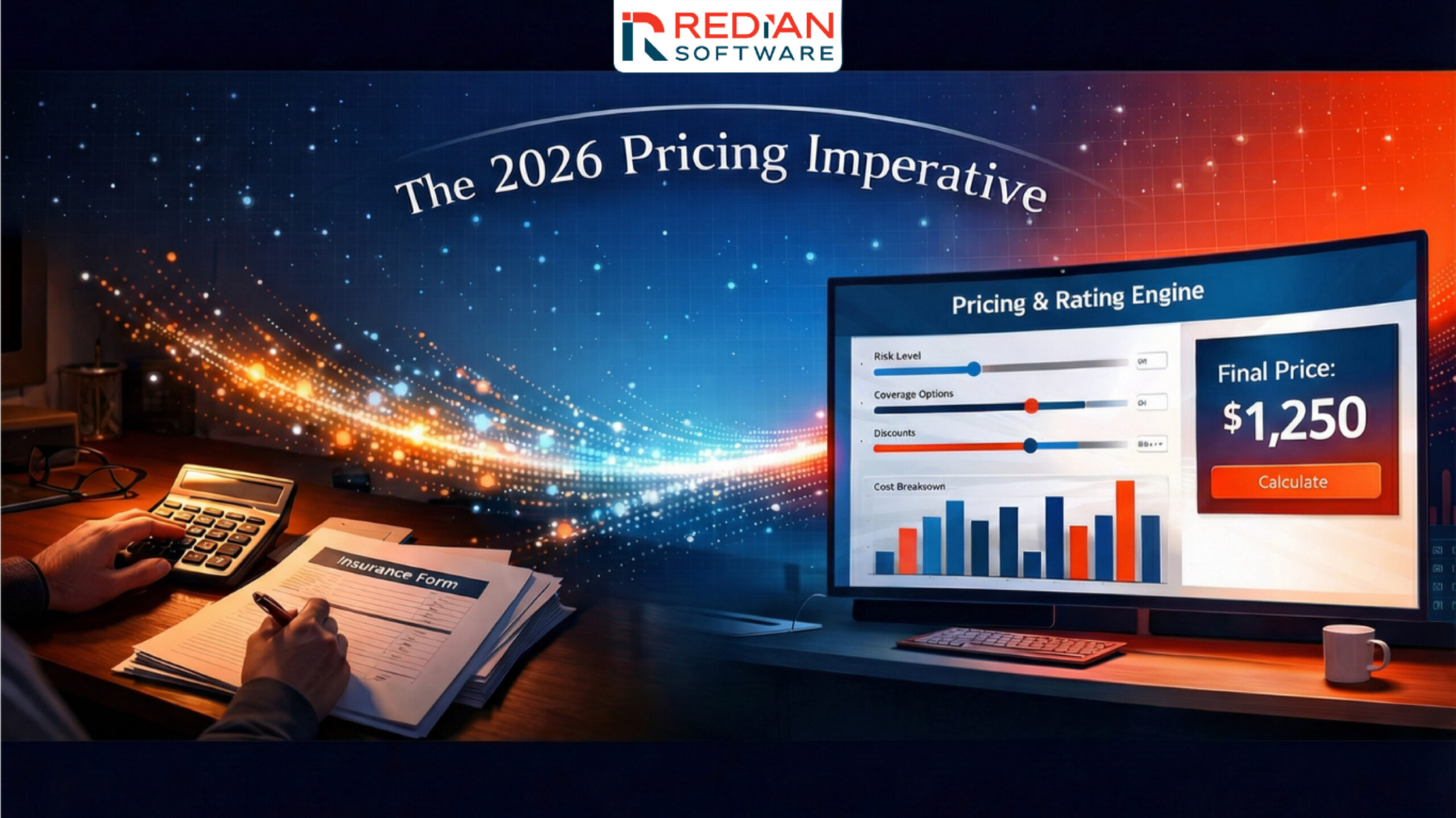
Pricing is the area where AI has been promised the longest and delivered the most unevenly. The honest picture in 2025–26 is that hybrid models — gradient boosted machines layered over a GLM, or GBM features fed back into a GLM — are beating pure GLMs on motor, health and SME property books. The lift is real: low single-digit points on loss ratio, larger on segmentation.
The catch is explainability. Regulators in the UK, Kenya, India and the UAE will not accept a black-box rating factor. The carriers winning here are the ones who treat SHAP values, monotonic constraints and reason codes as first-class deliverables, not afterthoughts. Our ML pricing and rating engine work is explicitly built to ship a model file and the regulatory file together.
Customer support agents on tier-1 traffic
Voice and chat agents are now handling 60–80% of tier-1 enquiries — policy status, premium due dates, claim status updates, document requests, address changes — without escalation. The economics are clear once two things are true: the agent is wired into the core policy system through proper APIs, and there is a clean handoff to a human the moment intent shifts to a sales or grievance flow. Without either, you have a more expensive IVR.
Where it is still mostly hype
The same period has produced a confident set of claims that do not yet hold up in production. It is worth being blunt about them, because the gap between the demo and the deployment is where budgets disappear.
Fully autonomous underwriting at any meaningful policy size is not a 2026 reality. Straight-through processing on small, well-bounded retail risks — yes, and has been for years. Autonomous binding on a commercial property risk, a large group health scheme or a marine cargo declaration — no. The exposure data is too sparse, the wordings too bespoke, the downside too asymmetric.
Generative-AI claims decisions without human review are similarly oversold. The model can draft a settlement letter, recommend a reserve, summarise the file. It should not be the signatory on a denial, a coverage dispute or any payment above a low retail threshold. Carriers that have tried this have walked it back after the first complaints-handling audit.
Real-time fraud detection at scale gets pitched as a model problem. In practice it is a data problem. Without unified party, claim and policy data, near-real-time event streams and a maintained network graph, the model is starved. Most insurers we meet are still two infrastructure projects away from being able to run the fraud model the vendor is trying to sell them — which is why our work in this space usually starts with the data plumbing, not the algorithm.
What separates the working programmes from the stalled ones
After three years of these programmes across multiple markets, the pattern is consistent.
- A named owner inside the business, not just inside IT. Every working AI use case in insurance has a head of claims, head of underwriting or chief actuary whose targets move if it works. Where the sponsor is a "head of innovation", the pilot survives a year and dies in renewal.
- Boring data work done first. Document AI works when the document store is consolidated and tagged. Pricing models work when the loss data is reconciled. Co-pilots work when the underwriting guidelines are versioned and machine-readable. None of this is glamorous, all of it is load-bearing.
- Cycle time and unit cost as the headline metric. Not "AI adoption", not "models in production". Time-to-quote, time-to-FNOL-to-payment, loss-adjustment expense per claim, underwriter capacity per FTE. If those numbers are not on the steering-committee deck, the programme is theatre.
- Human-in-the-loop by design, not by retrofit. The workflows that scale are the ones where the AI's output is a draft, a summary or a suggestion, and the human's action is the system of record. Retrofitting human review onto an autonomous design is far harder than building review in from day one.
How to start without burning a year
The pattern we recommend, and the one we run for clients, is deliberately small.
- Pick one workflow with a measurable cost or cycle-time number — FNOL registration, motor pricing refresh, renewal note drafting, mid-term endorsement processing. Just one.
- Measure the baseline honestly for at least a month. Volumes, handle time, error rate, downstream rework, customer NPS where you have it.
- Build the pilot against that baseline for a quarter. Keep the model small, the integration boring, the human firmly in the loop.
- Promote to production only if the numbers move and the operations team wants it. Kill it without ceremony if they don't.
This is unglamorous and it works. It also produces something a board can underwrite: a unit-economics number tied to a workflow, not a vision deck.
We pair this approach with our broader AI/ML consulting and AI/ML development practice, so the pilot is built on the same engineering, security and MLOps standards as the production system it will become — not as a throwaway proof of concept that has to be rebuilt the moment it works.
What we see coming next
Two shifts are worth watching over the next 12–18 months. Agentic workflows — where multiple specialised models coordinate to handle an end-to-end claim or submission triage — are starting to clear the prototype bar in motor and SME health. They will arrive in production faster than fully autonomous underwriting did, because the human still signs at the end.
The second shift is regulatory. The UK, EU, India and several African regulators are converging on documentation, monitoring and explainability requirements that look a lot like model risk management for banks. Carriers that have treated explainability and monitoring as core engineering — not as compliance overhead — will move faster when those rules land. Carriers that bolted them on will be re-platforming.
Build with Redian
We design, build and run AI systems for insurers and brokers across BFSI: claims intelligence, underwriting co-pilots, pricing engines, fraud analytics and the data foundations underneath them. If you have a workflow with a number attached and a sponsor who owns it, that is the right starting point — talk to our BFSI practice and we will tell you, honestly, whether AI is the right lever for it yet.
Stay current with our insights
One monthly email. Banking, insurance, AI/ML and CRM field notes. No spam.
We respect your privacy. Read our Privacy Policy.
Keep reading
More from Insurance
Insurance
Insurance broker management — from policy to profit in 2026
A practical guide to what a modern broker management system has to do — and how to evaluate one.
22 May 2026
Insurance
Beyond Manual Models — Real-Time, Data-Driven Insurance Pricing with Machine Learning
Traditional insurance pricing is static and reactive. Here's how machine-learning pricing engines ingest telematics, wearables and IoT data to deliver real-time, personalised premiums.
08 May 2026

Insurance
Insurance broker management system — full policy-to-profit guide
The complete guide to insurance broker management systems in 2026: features, deployment, costs and how brokerages recover $187K+ annually through proper automation.
26 Mar 2026
Build with Redian
Have a similar build in mind?
We've shipped insurance systems for banks, insurers, brokers, MFIs, SACCOs and enterprises across the USA, UK, Africa, UAE and India. Book a 30-min call with a senior engineer — no pitch deck, just a sharp first read on your initiative.
- CMMI Level 3 Appraised · ISO Certified delivery
- 1 business day response · NDA on request
- Senior engineers, not sales — first call